
Lower Chickahominy
Recreation and Ecotourism Infrastructure
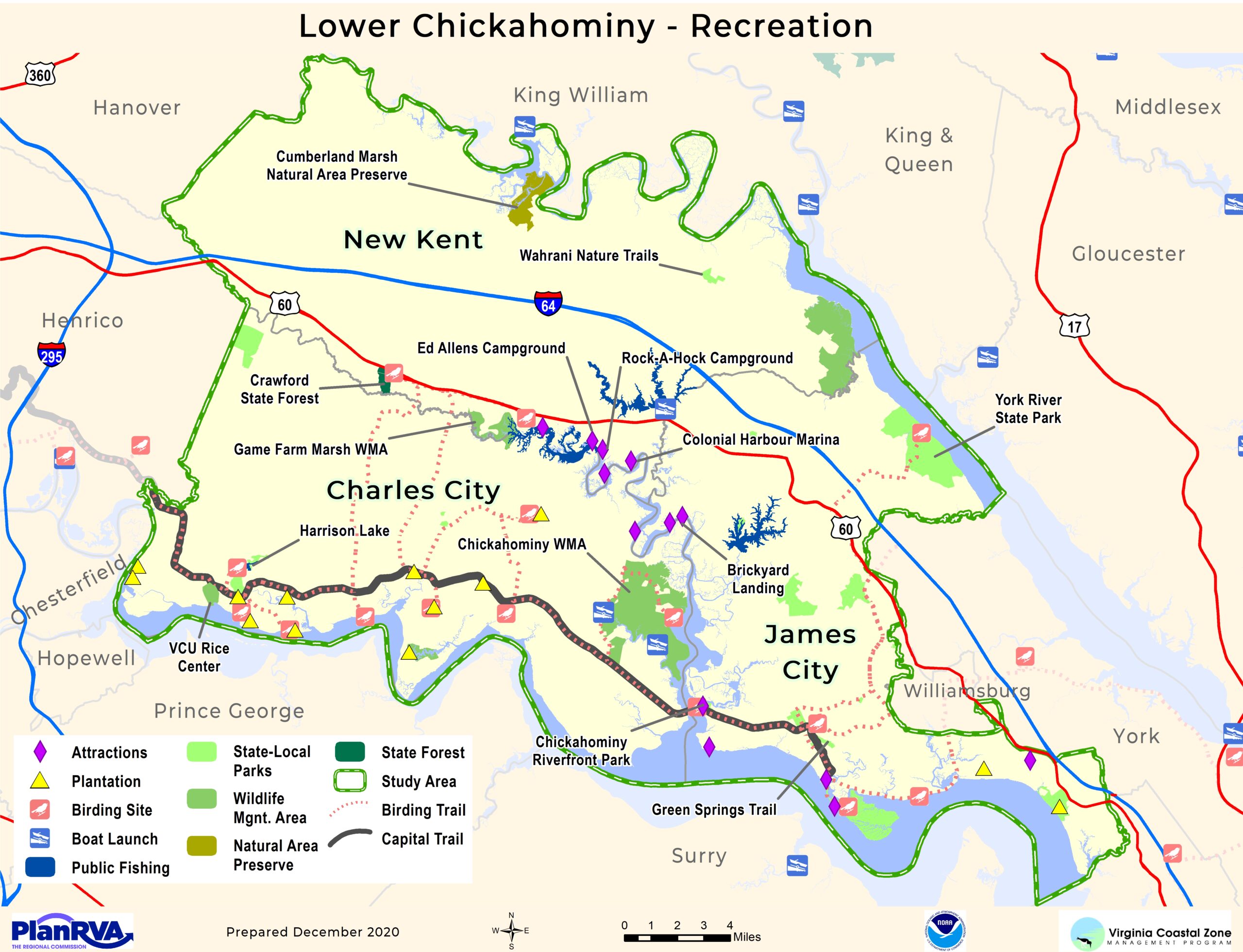
Nature and culture-based recreation and learning opportunities abound in the Lower Chickahominy watershed. These opportunities and their related assets support eco-tourism as an economic growth area for the region's economy. Ecotourism is a travel and related services that are based on experiences with the flora, fauna, and cultural heritage of a place or region. Responsible ecotourism has a positive impact on the ecology and the economy of a place.
The three counties of the Lower Chickahominy offer many recreational assets for human enjoyment and appreciation of the area's natural resources. Public parks and other public lands present many opportunities for people. Trails often exist within parks and public lands. The Virginia Capital Trail that connects Richmond to Jamestown along Route 5 crosses the Chickahominy River near its confluence with the James River and connects recreational assets near it. The Captain John Smith Water Trail runs up the James River from the Chesapeake Bay to the mountains of Virginia; a spur of the water trail extends up the Chickahominy River. For those interested in birding and wildlife viewing, Virginia's Birding and Wildlife Trail Plantation Loop has sites in all three counties of the Lower Chickahominy area. Access to the Chickahominy River itself as well as other water bodies in the area is provided through both public and private sites. All these assets as well as other infrastructure elements constitute ecotourism infrastructure.
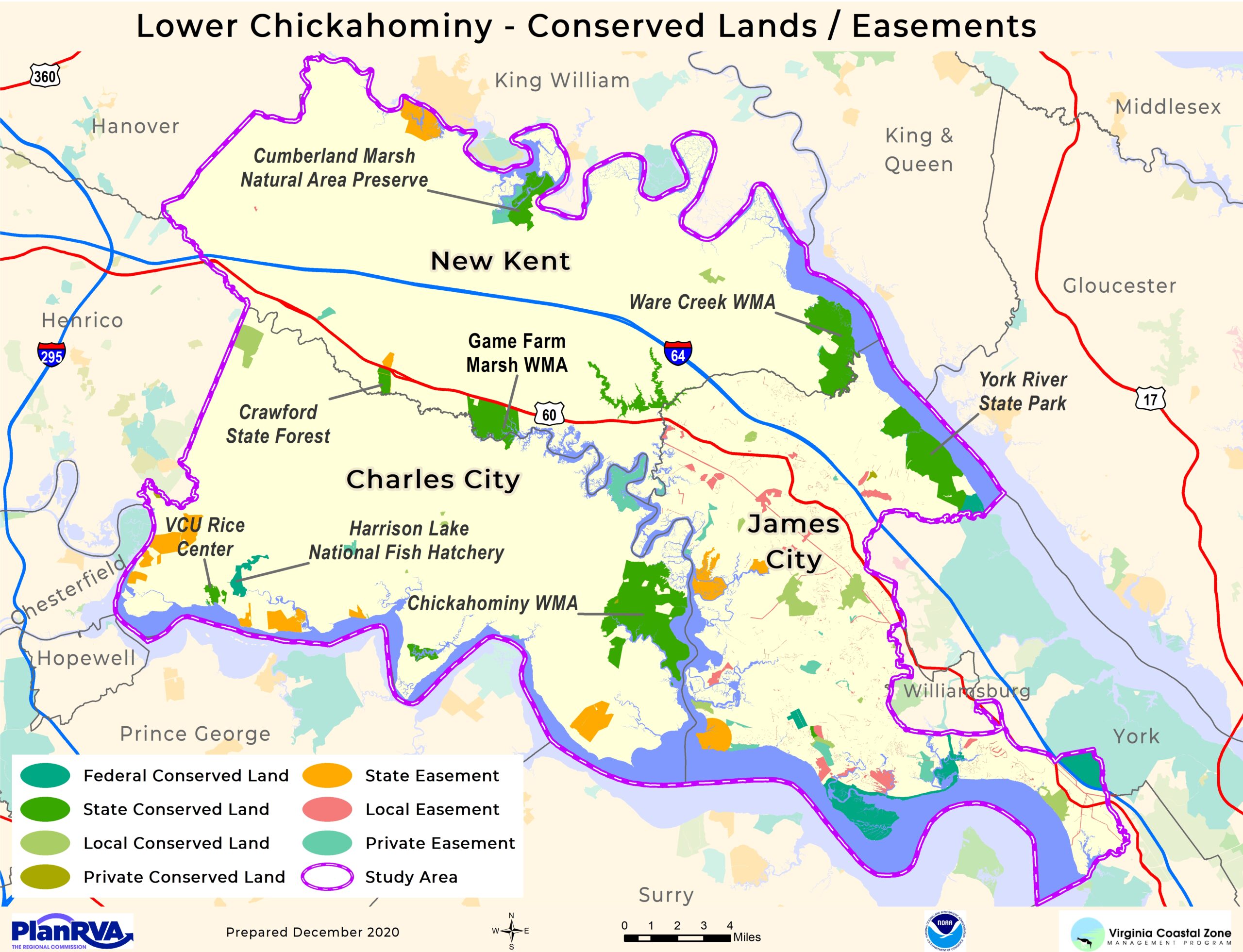
Conserved land & conservation easements support ecotourism infrastructure.
Publicly conserved lands and private conservation easements protect the area's natural resources for present and future generations to enjoy. The StoryMaps linked to on this page focus on assets that provide public access. It is important to note that conserved lands not open to public access also support ecotourism in a less direct manner. These lands provide habitat, support clean water, and air, and contribute to the character of an area. Without them, the areas that support public access would not be as vibrant.
Outdoor Recreational Heighlights
Eco-Tourism StoryMaps
Conservation Lands and Easements
Recreational Assets