
HOUSING
Why is Housing Important?
Availability of housing that is decent, safe, and affordable for a wide spectrum of people and families across the region impacts so many quality-of-life issues—families passing on generational wealth, longevity, healthy children, safe neighborhoods, access to employment and services, and the ability of a community to thrive and grow economically.
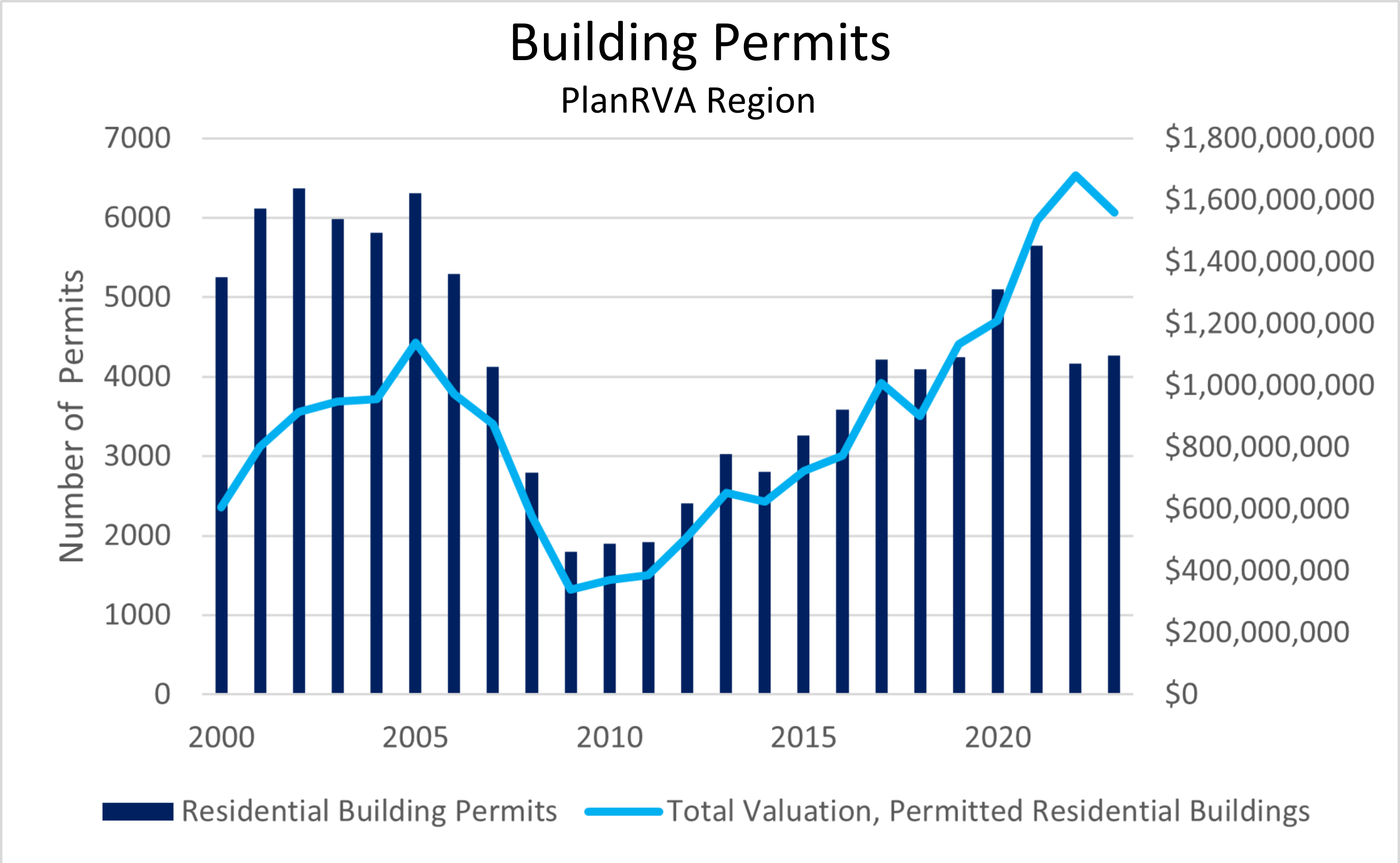
The demand for housing currently exceeds the supply, which drives up prices and limits the availability of housing that meets the various needs of families. The Great Recession of 2007–2012 caused a sharp decline in housing construction, leading to a persistent shortage that continues despite steady increases in housing production. This production trend, which shows a downturn followed by gradual growth, is illustrated in the graph titled “Building Permits in the PlanRVA Region”. Insufficient construction rates, a growing yet aging population, racial disparities, and the fact that housing costs have outpaced household incomes all contribute to today’s housing crisis.
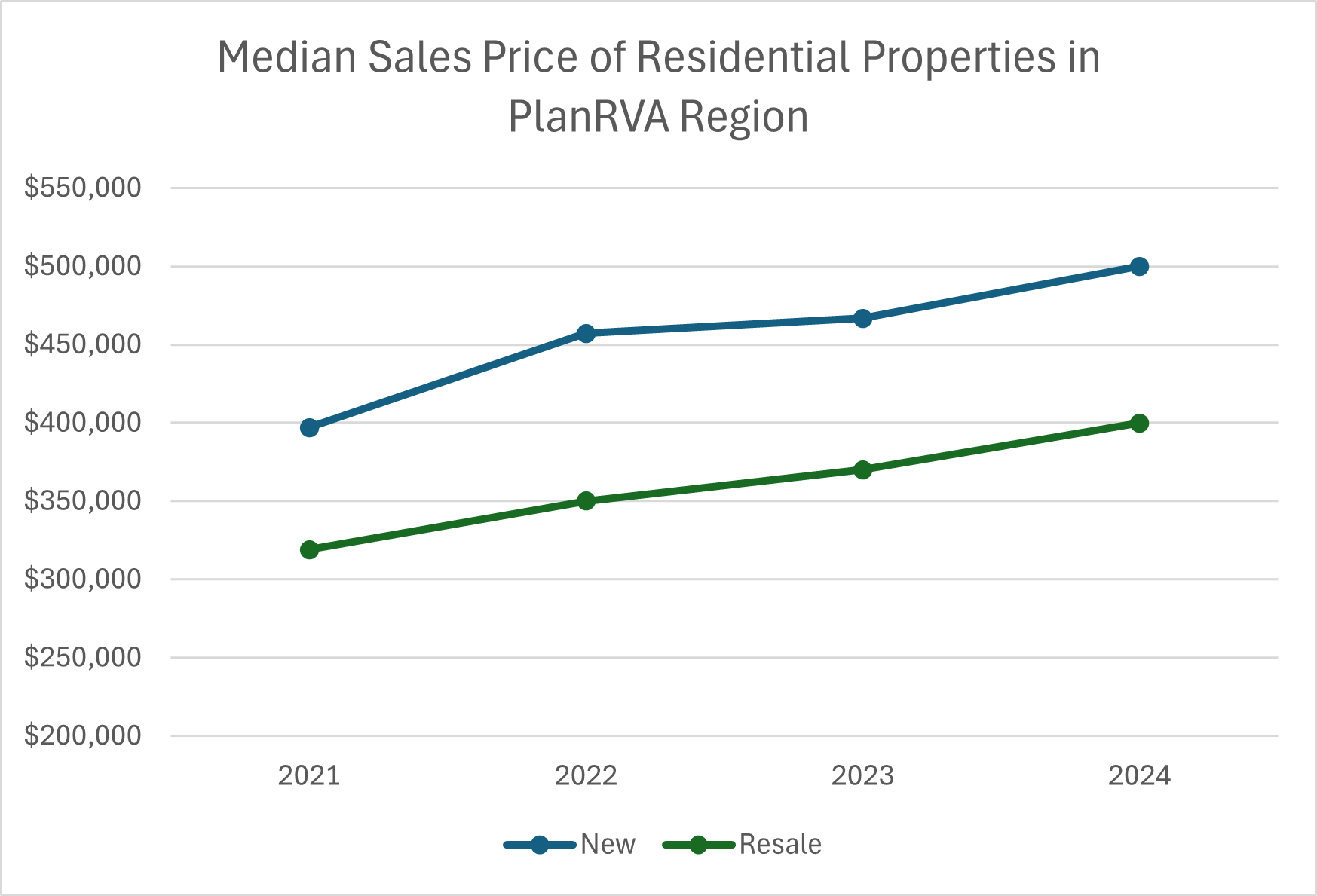
Housing affordability is a challenge for both buyers and renters. In 2021, the average price of a new home in the Richmond region was approximately $400,000. Just four years later, that average had risen to $500,000.
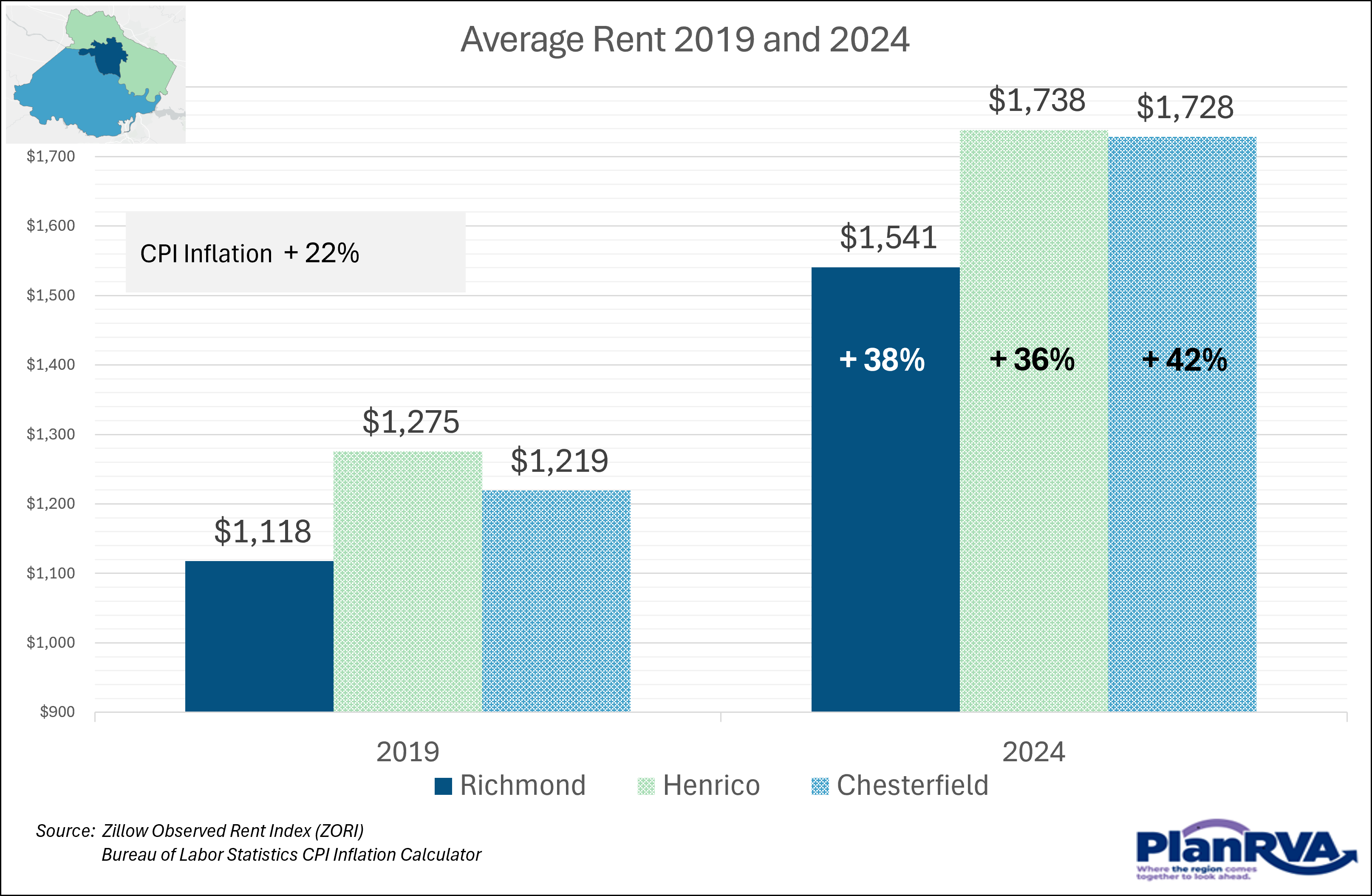
Rent is becoming increasingly expensive across the PlanRVA region. Between 2019 and 2024, the region’s three largest localities—Chesterfield County, Henrico County, and the City of Richmond—experienced significant rent increases even after accounting for inflation. Adjusted for inflation (+22%), rent prices rose by 16% in Richmond, 14% in Henrico, and 20% in Chesterfield.
Between 2015 and 2024, both the Consumer Price Index (CPI) inflation rate and the Metropolitan Statistical Area (MSA) average rent price have risen. However, the widening gap between their trend lines shows that MSA rent prices are outpacing CPI inflation.

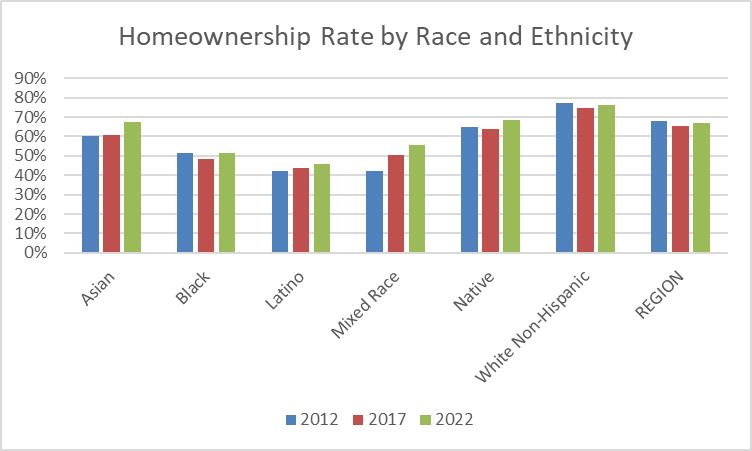
Decades of segregation, discriminatory lending practices and policies, and racial covenants have led to worse housing outcomes for people of color. While there are Fair Housing laws in place now, these long-term effects persist today. Homeownership rates, both nationally and in the PlanRVA region, are disproportionately higher among white residents. Since homeownership is a key driver of wealth accumulation, this disparity continues to reinforce racial economic inequality. Since 2012, homeownership rates among white households have consistently remained above 70%, while Black homeownership has hovered around 50%, and Latino homeownership has remained below 50%.